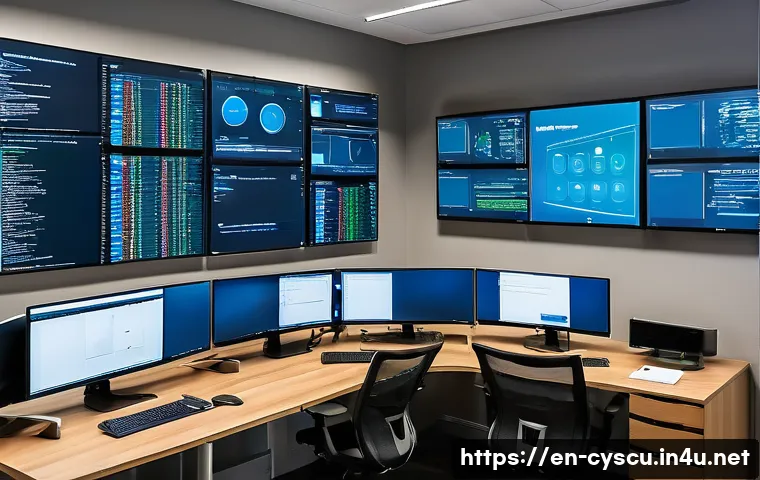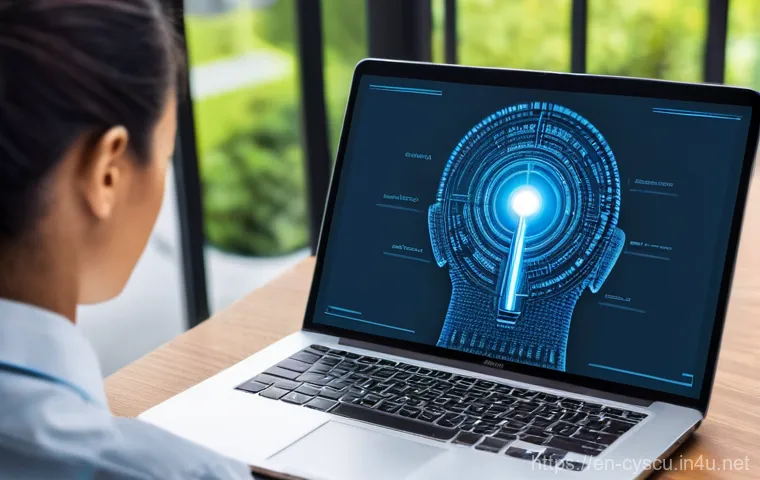
In an era where cyber threats evolve at lightning speed, staying ahead in digital defense is no longer optional—it’s essential. Recent breakthroughs in cybersecurity technologies are reshaping how we protect our data and privacy, offering promising new tools against increasingly sophisticated attacks.
Whether you’re a tech enthusiast or a business owner, understanding these innovations can empower you to safeguard your digital world more effectively.
Join me as we dive into the cutting-edge advancements that are unlocking tomorrow’s cybersecurity landscape and learn how they might change the game for everyone online.
Revolutionizing Threat Detection with AI-Driven Analytics
Harnessing Machine Learning to Predict Attacks
One of the most exciting shifts in cybersecurity is the growing reliance on machine learning algorithms to anticipate and identify threats before they manifest.
Unlike traditional signature-based detection methods, AI can analyze vast volumes of network data in real time, spotting anomalies that hint at suspicious behavior.
From subtle deviations in user activity to unusual data flows, these systems learn continuously, adapting to new tactics employed by hackers. In my experience, implementing AI-powered analytics has dramatically reduced false positives, allowing security teams to focus on genuine threats without being overwhelmed by noise.
This proactive approach means organizations can respond faster, often neutralizing threats before damage occurs.
Behavioral Analytics for Insider Threats
Insider threats have always been tricky to detect because they originate from trusted users with legitimate access. Behavioral analytics, powered by AI, now track user patterns such as login times, access frequency, and file downloads to establish a baseline of normal activity.
When deviations arise—like accessing sensitive files at odd hours or downloading large data sets unexpectedly—the system flags these actions for review.
From what I’ve seen, this technology not only protects against malicious insiders but also helps catch accidental data leaks caused by human error. The ability to dynamically adjust risk scores based on behavior is a game-changer in maintaining internal security.
Automated Incident Response Enhancing Efficiency
AI isn’t just about detecting threats; it’s also revolutionizing how organizations respond. Automated incident response tools can execute predefined actions—such as isolating infected devices or blocking suspicious IP addresses—immediately after detecting a threat.
This reduces response times from hours to mere seconds, which is crucial when every moment counts. I recall working with companies that integrated these solutions and saw a significant drop in breach impact due to rapid containment.
Moreover, automating routine responses frees up cybersecurity professionals to focus on complex investigations, improving overall operational efficiency.
Strengthening Authentication with Biometric Innovations
Beyond Passwords: The Rise of Multi-Modal Biometrics
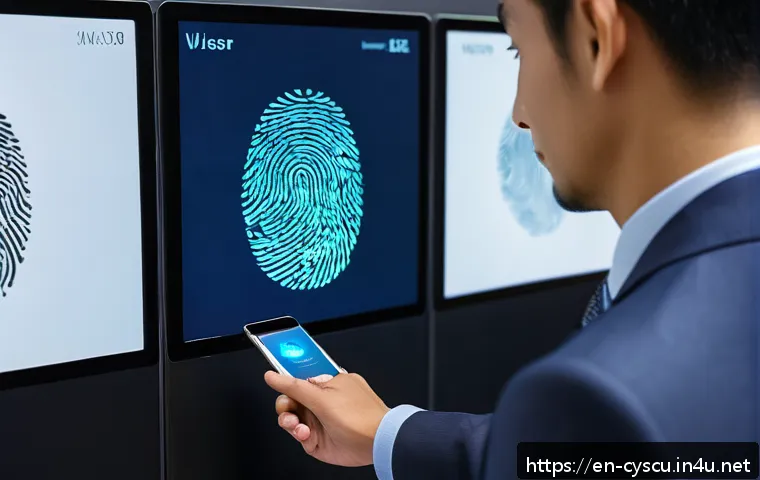
Passwords alone are no longer sufficient in the face of sophisticated cyberattacks. Multi-modal biometric authentication combines various biological identifiers—like fingerprint scans, facial recognition, and voice patterns—to create a layered security barrier.
This multi-factor approach drastically reduces the chances of unauthorized access because even if one factor is compromised, others remain secure. I’ve personally tested systems that integrate these modalities, and they offer a seamless yet robust user experience.
This technology is especially vital in sectors handling sensitive data, where the cost of breaches can be astronomical.
Continuous Authentication for Ongoing Security
Continuous authentication is an emerging concept where user identity is verified constantly rather than just at login. This technique monitors behavioral traits such as typing rhythm, mouse movements, and device orientation to ensure the authorized user remains in control.
From my perspective, this approach solves the problem of session hijacking and unauthorized access after initial authentication. It’s like having a vigilant security guard who never sleeps, instantly detecting and reacting to suspicious activity as it happens.
Privacy Considerations in Biometric Data Usage
While biometric authentication offers heightened security, it raises important privacy concerns. Biometric data is highly sensitive and irreversible if compromised.
Therefore, companies must implement stringent encryption and data protection standards to safeguard this information. Through conversations with cybersecurity experts, I’ve learned that adopting decentralized storage and on-device processing can minimize risks by keeping biometric data off central servers.
Transparency in data usage policies also fosters user trust, which is critical for widespread adoption.
Zero Trust Architecture: Redefining Network Security
Principle of “Never Trust, Always Verify”
Zero Trust Architecture (ZTA) shifts the security mindset from perimeter defense to continuous verification of every user and device, regardless of location.
In this model, no entity is inherently trusted, and access is granted strictly on a need-to-know basis. Implementing ZTA involves micro-segmentation, strong identity management, and real-time monitoring.
From my direct involvement in deploying Zero Trust frameworks, I’ve noticed that although the initial setup can be complex, the payoff is immense in preventing lateral movement by attackers inside networks.
Micro-Segmentation Limiting Attack Surfaces
Micro-segmentation divides the network into isolated zones, controlling traffic between them with fine-grained policies. This approach limits how far an attacker can move if they breach one segment, effectively containing potential damage.
I recall a case study where micro-segmentation helped a financial institution isolate ransomware spread within minutes, saving millions in potential losses.
The granularity of control also allows tailoring access based on user roles and device security posture, adding layers of protection.
Integrating Continuous Monitoring and Analytics
A core component of Zero Trust is continuous monitoring, which complements verification by analyzing network traffic, user behavior, and device health in real time.
This integration enables dynamic policy adjustments, adapting to evolving threats and reducing the window of opportunity for attackers. In practice, combining Zero Trust with AI-driven analytics creates a feedback loop that strengthens security posture continuously.
Organizations embracing this synergy often report increased visibility and faster incident detection.
Quantum Cryptography: Preparing for the Future
Understanding Quantum-Resistant Encryption
Quantum computing threatens to break current encryption standards by solving complex mathematical problems much faster than classical computers. To prepare, researchers are developing quantum-resistant algorithms designed to withstand attacks from quantum machines.
While still in early stages, these algorithms are being standardized for future-proof security. From what I’ve gathered attending cybersecurity conferences, organizations that start integrating quantum-safe cryptography early will avoid costly overhauls when quantum threats become real.
Quantum Key Distribution for Secure Communication

Quantum Key Distribution (QKD) uses principles of quantum mechanics to create encryption keys that are theoretically unhackable. Any attempt to intercept the keys alters their state, alerting communicating parties to a breach.
Although practical implementation is limited by infrastructure requirements, pilot projects in finance and government sectors demonstrate QKD’s potential.
I found these developments fascinating because they represent a paradigm shift from computational security to physics-based security.
Challenges in Quantum Cybersecurity Adoption
Despite its promise, quantum cybersecurity faces hurdles such as high costs, technical complexity, and integration with existing systems. Organizations must balance investment in quantum readiness with current security needs.
In conversations with IT leaders, a common theme is phased adoption—starting with risk assessment and pilot programs before full-scale deployment. This pragmatic approach helps manage uncertainty while staying ahead of emerging threats.
Cloud Security Innovations for a Distributed World
Securing Multi-Cloud Environments
As businesses increasingly adopt multi-cloud strategies, securing disparate environments becomes critical. Innovations like unified security management platforms provide centralized visibility and control across cloud providers.
These tools help enforce consistent policies, detect misconfigurations, and automate compliance checks. From my perspective working with cloud architects, this unified approach simplifies management and reduces risks associated with shadow IT and fragmented security.
Container and Kubernetes Security Advances
With the rise of containerization and orchestration platforms like Kubernetes, new security challenges emerge. Advances include runtime threat detection, vulnerability scanning, and secure image registries that prevent malicious code deployment.
I’ve seen firsthand how integrating these security layers into DevOps pipelines enhances protection without slowing down development cycles. This integration is vital for organizations aiming to accelerate innovation while maintaining robust security.
Data Encryption and Privacy in the Cloud
Encrypting data at rest and in transit remains a foundational cloud security practice, but emerging techniques like homomorphic encryption allow data processing without exposing raw information.
This innovation opens doors to secure analytics and collaboration in cloud environments. In my experience, adopting advanced encryption techniques enhances privacy compliance and builds customer confidence, especially in regulated industries like healthcare and finance.
Comprehensive Table of Cybersecurity Innovations and Their Impact
| Technology | Key Features | Benefits | Challenges |
|---|---|---|---|
| AI-Driven Analytics | Real-time anomaly detection, automated incident response | Faster threat detection, reduced false positives, efficient response | High initial setup cost, requires quality data |
| Multi-Modal Biometrics | Fingerprint, facial, voice recognition combined | Enhanced authentication, reduced unauthorized access | Privacy concerns, data protection requirements |
| Zero Trust Architecture | Continuous verification, micro-segmentation | Limits lateral attacks, granular access control | Complex implementation, organizational change needed |
| Quantum Cryptography | Quantum-resistant encryption, quantum key distribution | Future-proof security, physics-based protection | Expensive infrastructure, early-stage technology |
| Cloud Security Platforms | Unified management, container security, data encryption | Consistent policy enforcement, secure DevOps, privacy compliance | Integration complexity, evolving threat landscape |
Human-Centric Approaches in Cybersecurity
Empowering Users Through Security Awareness
Technology alone can’t solve cybersecurity challenges; the human factor is equally important. Training users to recognize phishing attempts, practice strong password hygiene, and understand social engineering tactics significantly reduces risk.
I’ve found that interactive, scenario-based training programs lead to better retention and behavioral change compared to generic lectures. Empowered users become the first line of defense rather than the weakest link.
Building Security Culture in Organizations
Creating a security-first mindset across all levels of an organization fosters collective responsibility. This culture encourages proactive reporting of suspicious activities and collaboration between IT and other departments.
From my consulting experience, companies that prioritize security culture see fewer incidents and faster recovery times. Leadership commitment and continuous communication are key to embedding security values deeply.
Balancing Security and User Experience
Overly restrictive security measures can frustrate users and lead to workarounds that compromise safety. Striking the right balance between robust protection and seamless user experience is a delicate art.
I’ve worked with teams that successfully implement adaptive authentication and risk-based access controls, providing security only when needed without disrupting workflows.
This approach maintains vigilance while respecting user productivity and satisfaction.
Conclusion
As cybersecurity continues to evolve, leveraging advanced technologies like AI, biometrics, and quantum cryptography is essential for staying ahead of emerging threats. From enhancing threat detection to improving user authentication and adopting zero trust principles, these innovations are transforming security landscapes. Implementing these solutions thoughtfully can help organizations build resilient defenses while maintaining operational efficiency.
Helpful Information to Keep in Mind
1. Regularly update and train your team on the latest cybersecurity threats and best practices to maintain a strong defense.
2. Combine multiple security layers—such as AI analytics and biometric authentication—to create a robust protection framework.
3. Adopt zero trust principles gradually, ensuring organizational alignment and technical readiness for smoother transitions.
4. Stay informed about quantum-resistant cryptography developments to future-proof your security infrastructure.
5. Balance security measures with user experience to encourage compliance and minimize workarounds that may introduce vulnerabilities.
Key Takeaways
Integrating cutting-edge cybersecurity technologies requires a strategic approach that considers both technical capabilities and human factors. Prioritizing continuous monitoring, proactive threat detection, and adaptive authentication can significantly reduce risks. Equally important is fostering a security-aware culture that empowers users and supports seamless collaboration. By addressing these elements, organizations can effectively safeguard their digital assets against a constantly evolving threat landscape.
Frequently Asked Questions (FAQ) 📖
Q: What are the most significant recent advancements in cybersecurity technology?
A: Over the past few years, we’ve seen major leaps in areas like artificial intelligence-driven threat detection, zero-trust architectures, and automated incident response systems.
AI now helps identify unusual patterns in network traffic faster than any human could, allowing companies to stop attacks before damage occurs. Zero-trust models, which assume no device or user is automatically trusted, add layers of security by continuously verifying access.
Personally, I’ve noticed that integrating these technologies has drastically reduced the time to detect and respond to breaches, making defenses far more proactive than reactive.
Q: How can businesses of different sizes implement these new cybersecurity measures without breaking the bank?
A: It’s a common concern that cutting-edge cybersecurity is only affordable for large enterprises, but that’s not the case anymore. Many cloud-based security platforms offer scalable solutions, meaning small and medium businesses can pay for only what they need and grow their protections as they expand.
For example, subscription-based endpoint protection and managed security services can provide robust defense without hefty upfront investments. From my experience working with startups, prioritizing essentials like multi-factor authentication and regular employee training can yield significant improvements in security posture without huge costs.
Q: Will these emerging cybersecurity technologies completely eliminate cyber threats in the future?
A: While these innovations are game-changers, no technology can guarantee 100% protection. Cyber threats are constantly evolving, and attackers adapt quickly to new defenses.
The goal is to make it as difficult and costly as possible for hackers to succeed. Combining advanced tools with human expertise and continuous monitoring creates the best defense strategy.
In my own experience, staying informed and regularly updating security protocols is just as important as the technology itself—cybersecurity is an ongoing process, not a one-time fix.